
Why Car Accident Injuries Are Not Always Immediately Obvious
Many people walk away from a car accident believing they are fine, only to develop troubling symptoms days or even weeks later. This delay often leads people to assume their pain or discomfort is unrelated to the collision. In reality, delayed symptoms are one of the most common signs of hidden injury after a crash.
During an accident, the body experiences sudden force that the nervous system is not prepared for. Adrenaline surges, masking pain and inflammation in the hours or days that follow. As that adrenaline fades, injured joints, muscles, discs, and nerves begin to signal distress. What starts as mild stiffness or fatigue can gradually become headaches, dizziness, shooting pain, or numbness.
Understanding why these symptoms appear later is critical. Ignoring them or hoping they resolve on their own can allow minor injuries to become chronic problems that interfere with daily life.
How Car Accidents Affect The Neck, Spine, And Nervous System
Even low speed collisions place significant stress on the body. When a vehicle stops suddenly, the head and spine continue moving for a fraction of a second. This rapid motion can strain joints, irritate discs, and stretch or compress nerves.
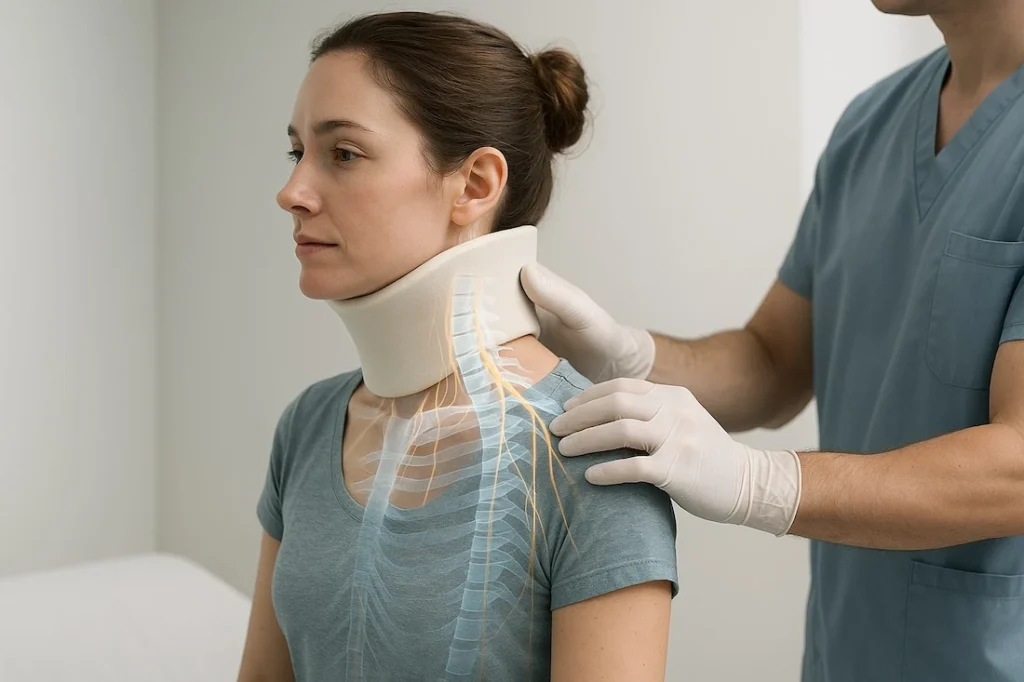
The neck is especially vulnerable because it supports the weight of the head while remaining highly mobile. Sudden acceleration or deceleration can disrupt normal joint movement in the cervical spine. When these joints do not move correctly, they can irritate surrounding tissues and affect the nervous system.
The spine also houses and protects nerves that travel to the arms, legs, and internal organs. When spinal alignment or joint motion is altered, nerve signals can be disrupted. This disruption often explains symptoms that seem unrelated to the neck or back, such as dizziness or tingling in the hands and feet.
Headaches, Dizziness, And Vertigo After A Car Accident
Headaches following a car accident are often blamed on stress or tension. While stress can contribute, many post accident headaches originate in the neck. Injured cervical joints and surrounding muscles can refer pain upward into the head, creating persistent or recurring headaches.
Dizziness and vertigo are also common after collisions, particularly those involving whiplash. The neck plays a major role in balance and spatial awareness. When neck joints are restricted or inflamed, they can send faulty signals to the brain, leading to sensations of spinning, lightheadedness, or unsteadiness.
These symptoms are not normal and should never be dismissed. Left untreated, they can worsen over time and significantly affect quality of life, concentration, and confidence during daily activities.
Shooting Pain Down The Arms Or Legs Is A Warning Sign
Pain that travels away from the spine and into the arms or legs is known as radiating pain. This type of pain is not a typical muscle strain. It often indicates irritation or compression of a nerve.
After a car accident, discs between the vertebrae can become injured or inflamed. These discs act as cushions and spacers between spinal bones. When a disc is compromised, it can press against nearby nerves. This pressure may cause sharp, burning, or electric sensations that shoot down the arms or legs.
Radiating pain should always be evaluated promptly. Without proper care, nerve irritation can become more severe, leading to weakness, loss of coordination, or long term nerve damage.
Numbness Or Tingling In The Hands Or Feet
Numbness and tingling are often overlooked because they may come and go. However, these sensations are important signals from the nervous system. They typically indicate that a nerve is not functioning properly.
After a collision, nerve pathways can be disrupted by joint misalignment, disc injury, or swelling around the spine. Even mild compression can interfere with normal nerve signaling, resulting in pins and needles sensations or reduced sensation in the hands or feet.
Ignoring numbness can be risky. Over time, ongoing nerve compression may lead to persistent sensory changes or weakness that becomes more difficult to reverse.
Joint Injuries Can Exist Even Without Pain
One of the most misunderstood aspects of car accident injuries is the idea that pain always signals damage. In reality, joints can be injured and lose proper movement without causing immediate discomfort.
Joints are designed to move within specific ranges. When a joint is forced beyond those limits during an accident, its normal mechanics can be altered. The body does not always have the ability to restore proper alignment and motion on its own, especially when multiple joints are affected.
Restricted joint movement can quietly place stress on surrounding muscles and nerves. Over time, this compensation leads to stiffness, inflammation, and pain that appears long after the original injury.
Why The Body Cannot Always Self Correct After A Collision
The human body is remarkably resilient, but it has limitations. While muscles can heal and adapt, joint alignment and precise motion often require external correction. After a car accident, the body may adapt to misalignment rather than fixing it.
This adaptation can create uneven movement patterns that feel normal at first. However, these patterns place abnormal stress on the spine and nervous system. Without intervention, the body continues to operate in a compromised state, increasing the risk of chronic pain and degeneration.
This is why early evaluation is so important. Identifying and correcting joint dysfunction before it becomes ingrained can significantly improve long term outcomes.
Why Early Evaluation After A Car Accident Matters
Waiting to seek care after a collision is one of the most common mistakes people make. Delayed treatment allows inflammation, joint restriction, and nerve irritation to persist unchecked. Over time, the body adapts in ways that make recovery slower and more complex.
Early evaluation helps identify injuries that may not be visible or immediately painful. It also allows for proper documentation, which can be important if symptoms worsen later.
Addressing injuries early often results in faster recovery, reduced pain, and a lower risk of long term complications.
How Chiropractors Evaluate Post Accident Injuries
Chiropractors are trained to assess joint motion, spinal mechanics, and nerve function. Their evaluation goes beyond simply asking where it hurts. By carefully examining how each joint moves, they can identify subtle dysfunctions that imaging tests may not immediately reveal.
Hands on assessment allows chiropractors to detect restricted or abnormal movement patterns caused by trauma. When necessary, chiropractors can also order advanced imaging such as MRI to better understand the extent and nature of an injury.
This comprehensive approach helps ensure that treatment is appropriate, targeted, and based on the specific injuries present.
When To Seek Care After A Car Accident
Any of the following symptoms warrant prompt evaluation after a collision:
- Headaches that persist or worsen
- Dizziness or balance problems
- Shooting pain into the arms or legs
- Numbness or tingling in the hands or feet
- Neck or back stiffness that does not resolve
- Pain that appears days or weeks after the accident
Even if symptoms seem mild, it is better to be evaluated early. What feels manageable today can become a significant obstacle to daily life if left untreated.
Taking Hidden Injuries Seriously
Car accidents often cause more than visible damage. Injuries to joints, discs, and nerves can develop quietly, showing up days or even weeks after the initial impact. Paying attention to these warning signs and addressing them early can play a major role in preventing long term pain and mobility issues.
If you are experiencing headaches, dizziness, numbness, shooting pain, or lingering stiffness after a car accident, a professional evaluation can help identify the underlying cause. The team at Lighthouse Chiropractic provides post-accident chiropractic care to patients in Sacramento and Elk Grove, focusing on identifying hidden injuries and guiding them toward a clear path to recovery.
If you have been in a car accident, even if your symptoms seem minor or delayed, contacting Lighthouse Chiropractic for an evaluation can help ensure injuries are adequately assessed and addressed before they become ongoing problems.
Disclaimer: This blog is for informational purposes only and does not constitute medical advice. Reading this content does not establish a doctor patient relationship. If you are experiencing pain, numbness, dizziness, or other symptoms following a car accident, seek evaluation from a qualified healthcare professional as soon as possible.