
TL;DR: Soft tissue injuries after accident chiropractic Sacramento Elk Grove care addresses damage to muscles, ligaments, tendons, and fascia that may not appear immediately after trauma. Common symptoms include pain, stiffness, and reduced range of motion. Effective chiropractic soft tissue care includes manual therapy, myofascial release, and rehabilitation exercises, while red flag symptoms require immediate medical attention. Proper treatment and home care significantly improve recovery outcomes.
What Are Soft-Tissue Injuries?
Soft-tissue injuries represent some of the most common yet frequently misunderstood consequences of automobile accidents, workplace incidents, and other traumatic events. These injuries affect the muscles, ligaments, tendons, and fascia that support and move our bodies, creating complex patterns of pain and dysfunction that can significantly impact daily activities and quality of life if not properly addressed through appropriate treatment approaches.
The definition of soft-tissue injuries encompasses damage to muscles, ligaments, tendons, and fascia that occurs when these structures are stretched, torn, or otherwise damaged beyond their normal capacity to handle stress. Unlike fractures or other obvious injuries that show up clearly on X-rays, soft-tissue injuries often require clinical examination and sometimes advanced imaging to diagnose accurately, making them challenging to identify and treat effectively.
Muscles, the largest component of soft tissue, can be strained or torn when subjected to forces that exceed their ability to contract or stretch safely. These injuries range from microscopic tears in individual muscle fibers to complete ruptures of entire muscle groups, with severity often correlating with the force of the initial trauma and the position of the body at the time of impact.
Ligaments, which connect bones to other bones and provide joint stability, can be sprained or torn when joints are forced beyond their normal range of motion. Ligament injuries are particularly common in car accidents where sudden stops or impacts cause joints to move violently in directions they’re not designed to handle, creating instability that can persist long after the initial injury.
Tendons, which attach muscles to bones and transmit the force of muscle contractions, can be strained or ruptured when muscles contract forcefully against resistance or when they’re stretched beyond their normal capacity. Tendon injuries often develop gradually after accidents as inflammation and scar tissue formation affect the normal mechanics of muscle-tendon units.
Fascia, the connective tissue that surrounds and separates muscles and other structures, can be damaged in ways that create widespread pain and dysfunction patterns that may seem unrelated to the original injury. Fascial restrictions can develop after trauma and create compensatory movement patterns that lead to secondary problems throughout the body.
Why soft-tissue injuries may be delayed in presentation after trauma relates to the complex physiological responses that occur following injury, including inflammation, muscle spasm, and the body’s natural protective mechanisms that can mask symptoms initially. The adrenaline response that occurs during traumatic events can temporarily override pain signals, while swelling and inflammation may take hours or days to develop fully.
The delayed onset of symptoms occurs because:
- Initial adrenaline and shock responses mask pain and other symptoms
- Inflammation develops gradually over 24-72 hours after injury
- Muscle spasm and guarding patterns may not appear immediately
- Scar tissue formation begins within days and can create progressive symptoms
- Compensatory movement patterns develop as the body tries to protect injured areas
- Secondary problems may develop as other structures work harder to compensate
Understanding this delayed presentation is crucial for both patients and healthcare providers, as symptoms that appear days or weeks after an accident may still be directly related to the original trauma. This delayed onset can create challenges for diagnosis and treatment, as well as complications for insurance and legal documentation of injury causation.
The microscopic nature of many soft-tissue injuries means that significant damage can occur without being visible on standard imaging studies like X-rays, which are designed to show bone and other dense structures. This invisibility can lead to underestimation of injury severity and inadequate treatment approaches that fail to address the full extent of tissue damage.
Soft-tissue healing follows predictable phases including inflammation, repair, and remodeling, each of which requires specific treatment approaches to optimize outcomes. Understanding these phases helps guide treatment decisions and patient expectations about recovery timelines and the importance of following through with recommended care even when symptoms begin to improve.
Typical Symptoms To Watch For
Recognizing the signs and symptoms of soft-tissue injuries after accidents requires understanding that these problems often present in patterns that may seem unrelated to the original trauma but actually reflect the complex interconnections between different body systems. Muscle strain post-accident and other soft-tissue injuries can create symptoms that develop gradually and may worsen over time if not properly addressed.
Pain patterns associated with soft-tissue injuries can be highly variable and may not always correlate directly with the location of tissue damage. Referred pain, where injury in one area creates symptoms in seemingly unrelated parts of the body, is particularly common with soft-tissue injuries and requires specialized knowledge to recognize and treat effectively.
Common pain presentations include aching or soreness that may worsen with activity or certain positions, sharp or shooting pains that occur with specific movements, burning or tingling sensations that suggest nerve involvement, deep throbbing pain that may be constant or intermittent, and muscle cramping or spasms that can be particularly severe at night or in the morning.
Stiffness represents another hallmark symptom of soft-tissue injury, often appearing as reduced flexibility and range of motion that may be most noticeable in the morning or after periods of inactivity. This stiffness occurs due to inflammation, muscle guarding, and the formation of adhesions within injured tissues that restrict normal movement patterns.
Stiffness patterns typically include:
- Morning stiffness that improves with gentle movement and activity
- Stiffness after sitting or remaining in one position for extended periods
- Reduced range of motion in specific directions or planes of movement
- Feeling of tightness or restriction when attempting normal activities
- Progressive stiffness throughout the day in severe cases
- Stiffness that worsens with weather changes or barometric pressure changes
Dizziness can occur with soft-tissue injuries, particularly those affecting the neck and upper back regions where proprioceptive sensors help maintain balance and spatial orientation. These sensors can be disrupted by injury and inflammation, leading to balance problems and dizziness that may persist until normal function is restored through appropriate treatment.
Neck-related dizziness, often associated with whiplash treatment chiropractor cases, can present as lightheadedness when changing positions, feeling unsteady or off-balance during walking or standing, sensation of spinning or motion when stationary, difficulty focusing or concentrating due to balance disturbances, and nausea or motion sickness symptoms that occur with head movement.
Reduced range of motion affects the ability to move freely and perform normal daily activities, often becoming one of the most functionally limiting aspects of soft-tissue injuries. This limitation can occur due to pain, stiffness, muscle spasm, or actual structural damage to tissues that normally allow smooth, coordinated movement.
Functional limitations may include difficulty turning the head while driving or checking blind spots, problems reaching overhead or behind the back for normal activities, reduced ability to bend forward or backward comfortably, limitations in rotational movements of the spine or extremities, and compensatory movement patterns that develop to avoid painful ranges of motion.
Red flags that need urgent attention represent symptoms that may indicate more serious underlying problems requiring immediate medical evaluation rather than routine chiropractic care. Recognizing these warning signs is crucial for ensuring appropriate care and avoiding delayed treatment of potentially serious conditions.
Urgent symptoms requiring immediate medical attention include:
- Severe headaches that worsen progressively or differ from typical headache patterns
- Numbness, tingling, or weakness in arms or legs that persists or worsens
- Loss of bowel or bladder control indicating possible spinal cord involvement
- Severe dizziness with nausea, vomiting, or balance problems
- Difficulty speaking, swallowing, or changes in vision
- Fever or signs of infection in conjunction with soft-tissue symptoms
- Progressive weakness or loss of coordination in hands or feet
Neurological symptoms deserve particular attention as they may indicate nerve involvement that requires specialized evaluation and treatment. These symptoms can develop immediately after injury or may appear gradually as swelling and inflammation affect nerve structures over time.
Sleep disturbances often accompany soft-tissue injuries and can significantly impact recovery by interfering with the body’s natural healing processes that occur primarily during rest periods. Pain, stiffness, and inability to find comfortable positions can create chronic sleep deprivation that slows healing and increases pain sensitivity.
Symptom Documentation And Tracking
Keeping detailed records of symptom patterns, triggers, and changes over time provides valuable information for healthcare providers and helps guide treatment decisions. This documentation can also be important for insurance and legal purposes when injuries are related to accidents or other traumatic events.
Effective symptom tracking includes daily pain levels using consistent rating scales, activities or positions that worsen or improve symptoms, sleep quality and duration, medications or treatments used and their effectiveness, and functional limitations that affect work, recreation, or daily activities.
Chiropractic Techniques For Soft-Tissue Recovery
Chiropractic care offers a comprehensive approach to soft-tissue injury recovery that addresses both the direct effects of tissue damage and the secondary problems that develop as the body compensates for injury. Chiropractic soft tissue care combines manual therapy techniques with modern rehabilitation approaches to promote healing while restoring normal function and preventing chronic problems.
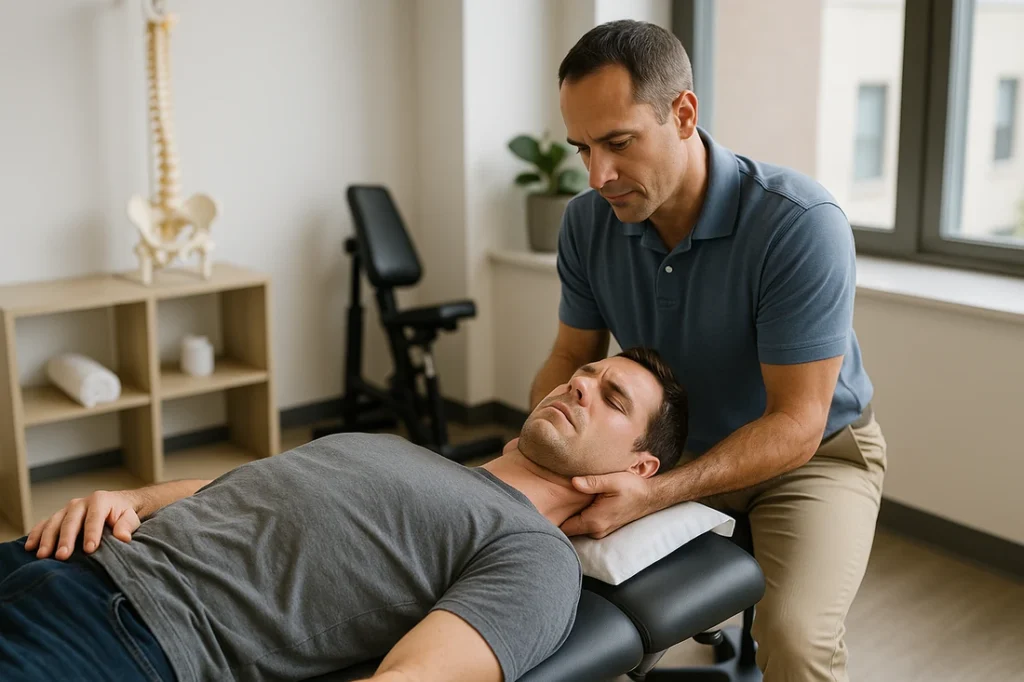
Manual therapy represents the foundation of chiropractic soft-tissue treatment, utilizing skilled hand techniques to address muscle tension, joint restrictions, and movement dysfunction that commonly develop after trauma. These techniques are applied with specific pressure, direction, and timing to achieve therapeutic effects that promote healing while reducing pain and improving function.
Chiropractic manipulation and mobilization techniques help restore normal joint motion and reduce muscle tension that often accompanies soft-tissue injuries. When joints don’t move properly due to injury, surrounding muscles must work harder to compensate, creating additional strain and perpetuating pain patterns that can become chronic without appropriate treatment.
Manual therapy approaches include:
- Spinal manipulation to restore normal vertebral motion and reduce nerve irritation
- Joint mobilization using gentle, rhythmic movements to improve range of motion
- Muscle energy techniques that use patient-generated contractions to improve function
- Trigger point therapy targeting specific areas of muscle tension and referral patterns
- Soft tissue mobilization to address adhesions and restrictions in muscles and fascia
- Stretching techniques applied by the practitioner to improve flexibility safely
Myofascial release techniques specifically target the fascial system that can become restricted after injury, creating widespread effects throughout the body. Fascial restrictions can develop in areas distant from the original injury site, making comprehensive assessment and treatment essential for complete recovery.
Myofascial release involves sustained pressure applied to fascial restrictions to allow gradual lengthening and improved tissue mobility. This technique can be particularly effective for addressing the complex patterns of restriction that develop after trauma and may not respond well to other treatment approaches.
The fascia forms a continuous network throughout the body, connecting muscles, organs, and other structures in ways that can create far-reaching effects from localized injuries. Understanding these connections allows chiropractors to address not only the site of obvious injury but also areas of compensation and secondary restriction that may be contributing to persistent symptoms.
Instrument-assisted soft tissue mobilization (IASTM) utilizes specially designed tools to detect and treat soft-tissue restrictions more effectively than manual techniques alone. These instruments allow practitioners to identify areas of restriction that may not be apparent through palpation and apply precise treatment forces that promote tissue healing and remodeling.
IASTM techniques offer several advantages including:
- Enhanced ability to detect tissue abnormalities and restrictions
- More precise application of therapeutic forces to specific areas
- Reduced practitioner fatigue during extended treatment sessions
- Ability to treat larger areas more efficiently than manual techniques
- Promotion of tissue remodeling through controlled microtrauma
- Integration with movement and exercise for functional improvement
Complementary modalities enhance the effects of manual therapy and can be particularly helpful for managing pain and inflammation while promoting tissue healing. These modalities work through different mechanisms to address various aspects of the injury and recovery process.
Ultrasound therapy uses high-frequency sound waves to create deep heating effects in tissues, promoting increased blood flow, reduced muscle spasm, and enhanced healing processes. This modality can be particularly effective for treating deeper muscle and tendon injuries that may not respond well to surface heating methods.
Transcutaneous electrical nerve stimulation (TENS) provides pain relief through electrical stimulation that can interrupt pain signals and promote the release of natural pain-relieving substances. TENS can be particularly useful for managing acute pain during the initial stages of recovery when movement and exercise may be limited.
Heat and ice therapy applications require careful timing and technique to maximize benefits while avoiding potential complications. Understanding when to use each modality and how to apply them safely is crucial for optimal treatment outcomes.
Heat therapy is generally most beneficial for chronic conditions and muscle spasm, while ice therapy is typically preferred for acute injuries with active inflammation. However, the specific application depends on the stage of healing, severity of symptoms, and individual patient responses to different modalities.
Low-level laser therapy represents a newer modality that shows promise for promoting tissue healing and reducing inflammation through photobiomodulation effects. This non-thermal treatment approach can be particularly useful for superficial soft-tissue injuries and may complement other treatment approaches effectively.
Treatment Progression And Adaptation
Effective soft-tissue injury treatment requires careful progression from initial pain relief and protection through restoration of function and prevention of recurrence. Treatment approaches must be adapted based on healing progress, patient response, and changing functional needs throughout the recovery process.
Early treatment phases focus on controlling pain and inflammation while protecting healing tissues from additional damage. As healing progresses, treatment emphasis shifts toward restoring mobility, strength, and normal movement patterns that support return to full function.
Rehabilitation And Home Care Recommendations
Successful recovery from soft-tissue injuries requires active patient participation in rehabilitation exercises and home care strategies that complement professional treatment. Injury rehab Elk Grove and Sacramento area patients benefit from comprehensive programs that address not only the injured tissues but also the movement patterns and lifestyle factors that may have contributed to injury susceptibility.
Gentle stretching progressions form a crucial component of soft-tissue injury rehabilitation, helping to restore normal tissue length and flexibility while preventing the formation of restrictive scar tissue. However, stretching must be applied carefully and progressively to avoid re-injury or aggravation of healing tissues.
Early stretching focuses on maintaining available range of motion and preventing excessive stiffness, while later phases emphasize restoring full flexibility and normal movement patterns. The timing and intensity of stretching exercises must be carefully matched to the healing stage and individual patient tolerance.
Effective stretching principles include:
- Starting with gentle, pain-free ranges of motion
- Holding stretches for appropriate durations based on tissue type and healing stage
- Progressing gradually in intensity and range as symptoms improve
- Incorporating both static and dynamic stretching techniques as appropriate
- Focusing on multiple planes of movement to address three-dimensional restrictions
- Combining stretching with strengthening exercises for optimal functional outcomes
Posture correction addresses one of the most common contributing factors to soft-tissue injury development and recurrence. Poor posture creates abnormal stresses on muscles, ligaments, and other soft tissues that can lead to overuse injuries and impaired healing after trauma.
Postural assessment and correction involves identifying specific postural deviations that may be contributing to symptoms, understanding the underlying causes of postural problems, teaching patients how to recognize and correct poor postures, providing exercises that address muscle imbalances contributing to postural problems, and modifying environmental factors that promote poor posture.
Common postural problems that affect soft-tissue health include forward head posture that increases stress on neck and upper back muscles, rounded shoulders that can lead to chest tightness and upper back weakness, excessive spinal curvatures that create uneven loading of spinal structures, and pelvic imbalances that can affect the entire kinetic chain from the lower back to the feet.
Ergonomic advice helps patients modify their work and home environments to support proper posture and reduce repetitive stresses that can impede healing or contribute to re-injury. This advice must be tailored to individual work demands, physical capabilities, and available resources for environmental modifications.
Workplace ergonomic considerations include:
- Proper desk and chair height to support neutral spinal positioning
- Monitor placement that allows comfortable viewing without neck strain
- Keyboard and mouse positioning that minimizes shoulder and wrist stress
- Lighting that reduces eye strain and forward head posturing
- Regular break schedules that interrupt prolonged static postures
- Lifting and carrying techniques that protect the spine and other vulnerable areas
Activity pacing represents a crucial skill for managing soft-tissue injuries effectively while maintaining functional capacity and preventing setbacks during recovery. Many patients struggle with finding the right balance between rest and activity, often oscillating between complete inactivity and overexertion that can delay healing.
Effective pacing involves understanding how much activity is beneficial versus harmful, recognizing early warning signs of overexertion, planning activities to distribute stress throughout the day rather than concentrating it in brief periods, and gradually increasing activity levels as healing progresses and tolerance improves.
Pacing strategies include breaking large tasks into smaller, manageable segments, alternating periods of activity with appropriate rest, modifying activities to reduce stress on injured tissues while maintaining function, and using pain and fatigue levels as guides for activity modification rather than pushing through symptoms.
Gradual return to work and sports requires careful planning to ensure that increasing demands don’t exceed healing capacity and create setbacks or re-injury. This process often involves modified duties or training regimens that allow progressive loading of healing tissues while maintaining safety and preventing complications.
Return-to-activity planning should consider the specific physical demands of work or sport activities, the current healing status and functional capacity of injured tissues, potential modifications that can reduce injury risk during the transition period, and objective measures of readiness for increased activity levels.
Sleep hygiene and recovery optimization play crucial roles in soft-tissue healing, as many of the body’s repair processes occur primarily during sleep. Poor sleep quality can significantly impair healing and increase pain sensitivity, creating a cycle that can perpetuate symptoms and delay recovery.
Sleep optimization strategies include establishing consistent sleep schedules that support natural circadian rhythms, creating sleeping environments that promote comfort and minimize pain, using appropriate pillows and mattress support for spinal alignment, managing pain and stiffness that interfere with sleep quality, and addressing stress and anxiety that commonly accompany injuries and can disrupt sleep patterns.
Home Exercise Program Development
Developing effective home exercise programs requires careful consideration of patient capabilities, available equipment, and safety factors that ensure exercises can be performed correctly without professional supervision. Programs must be progressive yet safe, challenging enough to promote improvement while avoiding re-injury risk.
Successful home programs typically include clear instructions with pictures or videos, progression guidelines that help patients advance safely, warning signs that indicate when to stop or modify exercises, and regular reassessment schedules to ensure continued appropriateness and effectiveness.
When To Refer Or Seek Advanced Imaging
Understanding when soft-tissue injuries require additional evaluation beyond standard chiropractic care is crucial for ensuring optimal patient outcomes and avoiding missed diagnoses that could significantly impact recovery. While many soft-tissue injuries respond well to conservative chiropractic treatment, certain presentations warrant more extensive investigation or specialized care approaches.
When persistent symptoms warrant MRI or specialist referral depends on several factors including symptom duration and progression, response to initial treatment, presence of neurological signs, and specific patient characteristics that may indicate underlying complications. The decision to pursue advanced imaging or referral requires careful clinical judgment based on comprehensive assessment findings and treatment response patterns.
Persistent symptoms that fail to show expected improvement within reasonable timeframes may indicate more complex injuries than initially apparent, underlying pathology that wasn’t detected in initial evaluation, or complications that have developed during the healing process. Understanding normal healing timelines helps distinguish between expected recovery variations and situations requiring additional investigation.
Indications for advanced imaging include:
- Symptoms that worsen progressively despite appropriate treatment
- Neurological symptoms that develop or persist after initial injury
- Functional limitations that don’t improve with standard treatment approaches
- Suspicion of underlying structural damage not visible on initial imaging
- Legal or insurance requirements for documentation of injury extent
- Patient concerns that warrant additional evaluation for reassurance
MRI evaluation provides detailed visualization of soft tissues that cannot be seen on standard X-rays, including muscles, ligaments, tendons, cartilage, and neural structures. This imaging modality can reveal tissue tears, inflammation patterns, and other abnormalities that may not be apparent through clinical examination alone.
However, MRI findings must be interpreted carefully in the context of clinical presentation, as some abnormalities visible on imaging may not be clinically significant or may represent pre-existing conditions rather than acute injury. Correlation between imaging findings and clinical symptoms is essential for appropriate treatment planning.
Specialist referral becomes appropriate when conditions exceed the scope of chiropractic practice or when additional expertise is needed for optimal patient care. This coordination ensures that patients receive comprehensive care that addresses all aspects of their condition while maintaining continuity of treatment approaches.
Common referral scenarios include orthopedic consultation for suspected structural damage or surgical considerations, neurology referral for persistent neurological symptoms or complex pain patterns, physical therapy referral for specialized rehabilitation techniques or equipment, pain management consultation for chronic pain conditions not responding to conservative care, and rheumatology referral when inflammatory or autoimmune conditions are suspected.
How chiropractors coordinate care with orthopedics and physical therapy involves maintaining open communication about treatment goals, sharing relevant findings and progress reports, avoiding conflicting treatment approaches that might confuse patients or impede recovery, and establishing clear roles and responsibilities for different aspects of patient care.
Effective care coordination includes:
- Timely communication of assessment findings and treatment responses
- Shared treatment planning that addresses all aspects of patient needs
- Clear documentation of each provider’s role in the overall care plan
- Regular progress updates to ensure coordinated approach effectiveness
- Patient education about the rationale for multi-provider care
- Flexibility to modify approaches based on patient response and changing needs
Surgical considerations for soft-tissue injuries are relatively uncommon but may become necessary for severe injuries involving complete tissue ruptures, persistent instability that affects function significantly, or complications such as chronic pain syndromes that don’t respond to conservative treatment approaches.
The decision for surgical intervention requires careful evaluation of injury severity, functional impact, patient age and activity level, response to conservative treatment, and potential risks and benefits of surgical versus non-surgical approaches. Most soft-tissue injuries can be managed effectively with conservative care, making surgery a last resort for cases that don’t respond to appropriate non-operative treatment.
Legal and insurance considerations may influence referral decisions when injuries are related to accidents, workplace incidents, or other situations involving potential litigation. Documentation requirements for legal cases may necessitate additional imaging or specialist evaluation even when clinical improvement is occurring satisfactorily with conservative care.
Understanding these external factors helps ensure that patients receive appropriate care while meeting documentation requirements that may affect their legal and financial interests. However, treatment decisions should always prioritize optimal patient outcomes over external considerations whenever possible.
Red Flag Symptom Management
Recognizing and responding appropriately to red flag symptoms ensures patient safety while avoiding unnecessary anxiety about normal healing variations. Healthcare providers must maintain vigilance for warning signs while reassuring patients about expected recovery patterns and symptom fluctuations.
Red flag management involves clear patient education about warning symptoms, established protocols for urgent evaluation when concerning symptoms develop, regular reassessment to monitor for developing complications, and appropriate referral pathways for emergency situations.
Soft-tissue injuries after accidents require comprehensive, coordinated care that addresses both immediate symptoms and long-term recovery goals. Through skilled assessment, appropriate treatment techniques, and careful monitoring for complications, chiropractic care plays a vital role in helping patients recover fully from these common but complex injuries. The key to success lies in understanding that each patient’s healing journey is unique, requiring individualized approaches that adapt to changing needs while maintaining focus on restoring optimal function and preventing future problems.