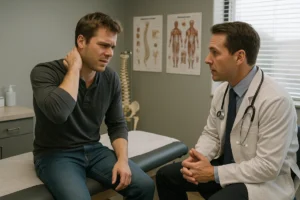

After a car accident, many people expect pain to be the first sign of injury. When pain does not show up right away, stiffness is often brushed off as tension, stress, or something that will resolve on its own. Neck stiffness without pain is actually one of the most common early signs of injury after a collision.
Stiffness may feel like resistance when turning your head, difficulty looking over your shoulder, or a sense that your neck does not move as freely as it used to. Because it does not always hurt, people frequently ignore it. Unfortunately, stiffness is often the body’s first signal that something is wrong beneath the surface.
Understanding why stiffness appears, even in the absence of pain, can help prevent more serious problems later.
Why You Can Have a Neck Injury Without Feeling Pain
Pain is not the only indicator of injury. After a car accident, the body releases adrenaline and other stress hormones that temporarily dull pain signals. This response helps people function immediately after a traumatic event, but it can also delay awareness of injury.
In addition, not all injuries trigger pain receptors right away. Joint restrictions, subtle ligament strain, and early inflammation can limit movement without creating immediate discomfort. The nervous system may not register these changes as pain until compensatory stress builds over time.
This is why many people report feeling fine after a crash, only to develop pain days or weeks later. Stiffness often comes first, serving as an early warning sign before pain becomes noticeable.
What Causes Neck Stiffness After a Collision
During a car accident, the head and neck move suddenly and forcefully. Even in low speed crashes, this rapid motion can disrupt normal joint mechanics in the cervical spine.
When joints are forced beyond their normal range, they may not return to their ideal position or movement pattern on their own. Surrounding muscles often tighten as a protective response, creating the sensation of stiffness. This muscle guarding is the body’s attempt to stabilize injured joints.
At the same time, the joints themselves may lose normal mobility. This loss of motion does not always hurt initially, but it changes how the neck functions during everyday movements such as driving, working at a computer, or sleeping.
Why Restricted Joint Motion Matters Long Term
Joint motion plays a critical role in spinal health. When joints do not move properly, stress is transferred to other structures, including muscles, discs, and nerves. Over time, these compensations can lead to pain, inflammation, and degeneration.
Restricted motion in the neck can also affect posture and movement patterns throughout the upper back and shoulders. What begins as mild stiffness may eventually contribute to headaches, upper back tension, or nerve irritation in the arms.
Ignoring stiffness allows these dysfunctional patterns to become ingrained. Once the body adapts to limited motion, restoring normal movement becomes more difficult and recovery often takes longer.
Why The Body Cannot Always Restore Proper Neck Motion On Its Own
The body is capable of remarkable healing, but it has limitations. Muscles can relax and strengthen naturally, but joints that have lost proper motion often require external assistance to return to normal function.
After trauma, the body may adapt by moving around restricted joints instead of correcting them. This adaptation helps you function in the short term, but it does not resolve the underlying issue. In some cases, the nervous system begins to treat restricted motion as normal.
Without proper evaluation and care, stiffness can persist indefinitely. This ongoing restriction increases wear and tear on the spine and raises the risk of chronic neck problems later in life.
Signs Neck Stiffness Should Be Evaluated
Not all stiffness requires immediate intervention, but certain signs suggest that evaluation is important. These include stiffness that lasts more than a few days, reduced range of motion when turning or tilting the head, or stiffness that worsens instead of improving.
Additional warning signs include the onset of headaches, shoulder tension, or discomfort between the shoulder blades. These symptoms often indicate that restricted neck motion is beginning to affect surrounding areas.
If stiffness appeared after a car accident, even if the crash seemed minor, it should not be ignored. Early assessment can help determine whether the stiffness is part of a more significant injury.
How Chiropractors Evaluate Neck Stiffness After a Car Accident
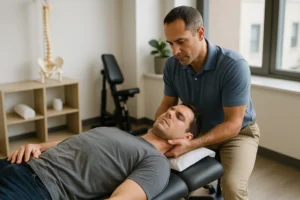
Chiropractic evaluation focuses on how joints move, not just where pain is felt. A chiropractor will assess the range of motion in the neck, identify areas of restriction, and evaluate how those restrictions affect overall spinal mechanics.
Hands on examination allows chiropractors to detect subtle joint dysfunctions that may not appear on standard imaging. This approach is especially valuable when stiffness is present without pain.
If findings suggest deeper injury, such as disc involvement or nerve irritation, chiropractors can determine when additional imaging or referral is appropriate. This ensures care is guided by accurate information rather than guesswork.
Why Early Evaluation Can Prevent Chronic Neck Problems
Addressing neck stiffness early helps prevent the progression from limited motion to chronic pain. Early care supports proper healing, restores normal movement patterns, and reduces compensatory stress on surrounding tissues.
Patients who address stiffness soon after an accident often recover more quickly and with fewer complications. Early evaluation also provides reassurance when no serious injury is found, allowing patients to move forward with confidence.
Waiting until pain develops can make treatment more complex and recovery longer. Stiffness is often the body’s first opportunity to intervene before symptoms escalate.
When To Seek Care Even If You Feel Mostly Fine
Feeling mostly fine after a car accident does not guarantee that everything is functioning normally. Subtle changes in movement can have long term consequences if left unaddressed.
If your neck feels stiff, restricted, or different than it did before the accident, it is reasonable to seek evaluation. Doing so does not mean you are overreacting. It means you are being proactive about your health.
An early assessment can help identify whether stiffness is a temporary response or a sign of deeper injury. Taking action at this stage can help protect your neck, reduce future pain, and support long term spinal health.
Supporting Your Recovery After a Car Accident
Car accidents can affect the body in ways that are not immediately obvious. Neck stiffness without pain is one of the most overlooked signs of injury, yet it often provides an important window for early intervention.
If you have noticed stiffness or reduced neck mobility after a collision, professional evaluation can help determine what is happening and what steps may support recovery. Lighthouse Chiropractic provides post accident chiropractic care for patients in Sacramento and Elk Grove, with a focus on identifying joint dysfunction early and guiding patients toward a safe, effective recovery. Call (916) 572-4437 now.
Even if pain has not developed, addressing stiffness now can help prevent future problems and support long term neck health.
Disclaimer: This blog is for informational purposes only and does not constitute medical advice. Reading this content does not establish a doctor patient relationship. If you are experiencing stiffness, reduced mobility, or other symptoms after a car accident, consult with a qualified healthcare professional for evaluation and care.