
Rear-end collisions are common, but that does not make them harmless. A vehicle may look only mildly damaged while the people inside feel stiff, sore, or unsettled for days. Even a lower-speed impact can move the body suddenly enough to irritate the neck, back, shoulders, and surrounding soft tissues.
Many patients feel shaken at first, then notice symptoms after the adrenaline fades. That delay can be frustrating because it makes the injury feel less obvious. But post-accident discomfort does not always follow a neat timeline.
The Body Moves Fast Even When the Crash Seems Minor
During a rear-end collision, the head and torso may move at different speeds. That sudden motion can contribute to whiplash-type symptoms, upper back tension, shoulder soreness, headaches, and limited range of motion. Some people also notice fatigue, dizziness, or trouble sleeping comfortably.
The force of a crash is not only about speed. Vehicle position, seat posture, headrest placement, surprise, prior injuries, and the direction of impact can all affect how the body responds.
Symptoms May Show Up During Ordinary Tasks
After a rear-end collision, symptoms often become more noticeable during normal activities. Turning to check a blind spot, sitting at a desk, lifting a bag, reaching overhead, or sleeping in the wrong position may reveal pain that was not obvious at first.
That is one reason recovery should focus on function, not just pain on a single day. A patient may feel okay while resting, then struggle with driving, work, errands, or household routines.
Know When Medical Attention Comes First
Urgent symptoms should be medically evaluated. Severe pain, head injury concerns, numbness, weakness, neurological symptoms, confusion, or symptoms that worsen quickly are reasons to seek prompt medical care.
Chiropractic care should fit into the right recovery plan, not replace emergency or specialty care when that is needed. For many patients, chiropractic care may be considered after serious concerns have been addressed or ruled out.
What a Careful Chiropractic Visit Looks For
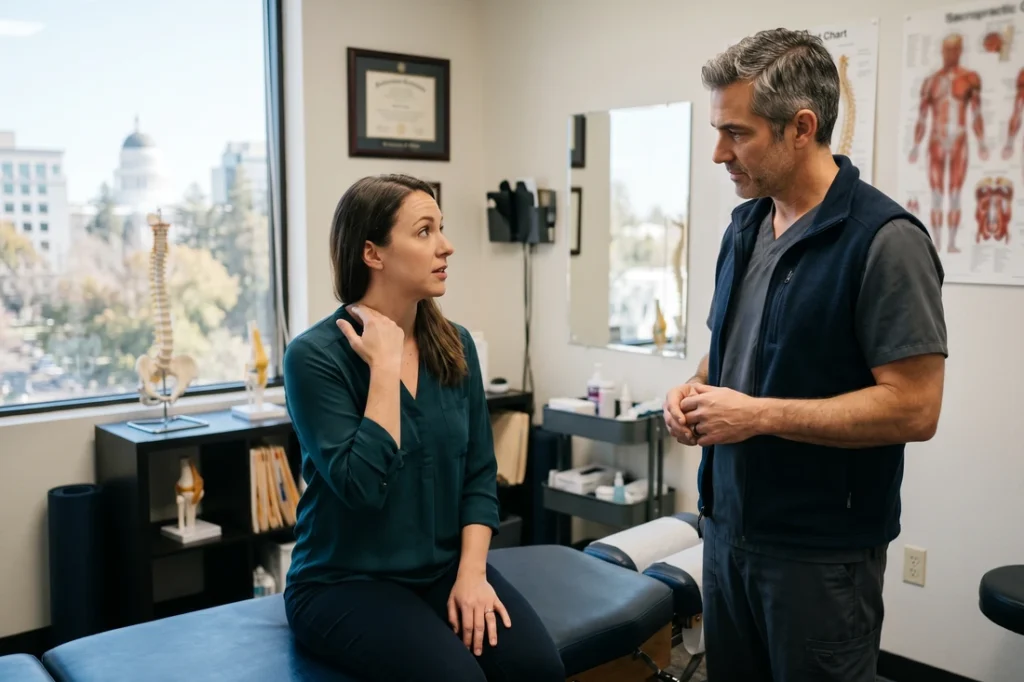
A provider should ask how the crash happened, when symptoms began, what movements are difficult, and whether the patient has already received medical care. Range of motion, tenderness, posture, and movement quality may all help guide the next step.
The visit should feel like an evaluation, not a race to treatment. Patients should understand what the provider is seeing, what the goals of care are, and what symptoms would require referral.
Documentation Helps Make Recovery Clearer
Clear notes about symptoms, function, range of motion, and treatment response can help patients understand progress. Documentation may also be useful if insurance questions arise after the crash.
Patients can help by being specific. Instead of saying “my neck hurts,” it may be useful to explain when it hurts: while driving, after work, when turning the head, during sleep, or while lifting. Specific details create a clearer picture.
A Realistic Path Forward
Recovery after a rear-end collision can be uneven. Some days may feel better than others. A thoughtful care plan should adapt to the patient’s response rather than forcing every person through the same routine.
Lighthouse Chiropractic supports Sacramento-area patients after injury accidents, including rear-end collisions. If your neck, back, or shoulders have felt different since a crash, a careful evaluation can help you understand the next step.
This article is for general educational purposes only and is not medical advice, diagnosis, or treatment. Individual needs and health conditions vary. Always consult a qualified healthcare professional for personal medical guidance.