Thanksgiving Travel in Sacramento: Why Holiday Traffic Can Lead to More Car Accidents
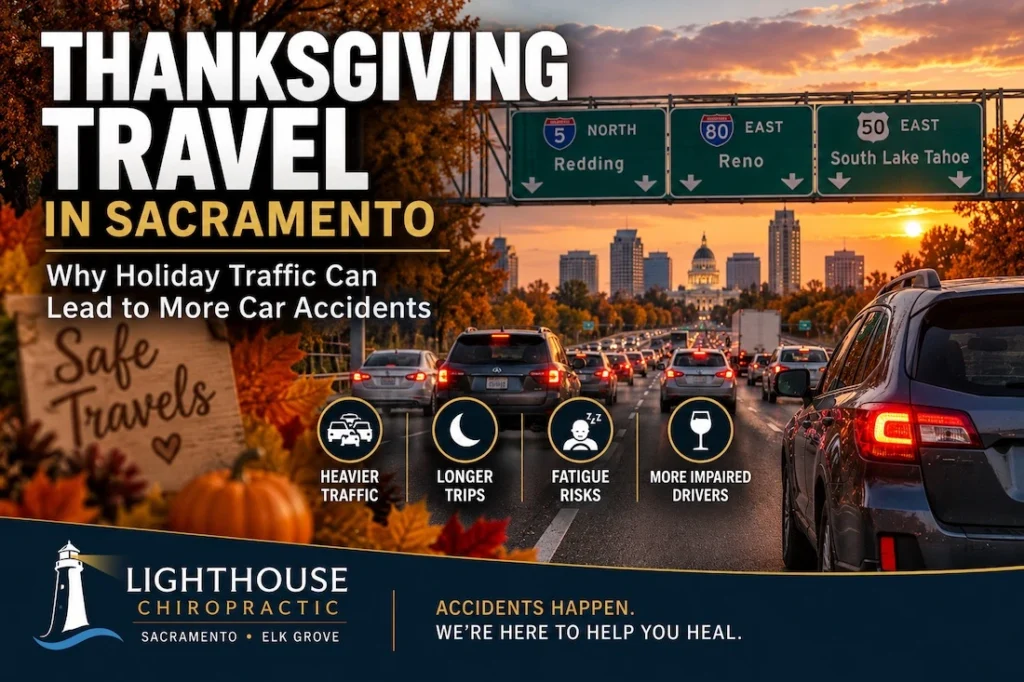
Thanksgiving is one of the busiest travel periods of the year, putting more drivers on Sacramento-area roads at the same time. Heavier traffic, longer trips, driver fatigue, congestion and impaired driving can all increase the risk of a collision during the holiday travel period.
For Sacramento and Elk Grove drivers, Thanksgiving travel often means navigating busy stretches of I-5, I-80, Highway 99 and US-50 while thousands of other people are trying to reach their destinations at the same time. Even relatively short trips across the region can involve more congestion than usual.
If a Thanksgiving car accident does happen, the effects may continue long after the holiday weekend is over. Neck pain, back pain, headaches, stiffness and other accident-related symptoms can interfere with work, sleep and normal activities, and some symptoms may not become obvious immediately after the crash.
Understanding why Thanksgiving driving can be more hazardous, and knowing what to do if you’re injured, can help you prepare for one of the year’s busiest travel periods.
Why Are There More Car Accident Risks Around Thanksgiving?
Thanksgiving creates several driving risks at the same time: increased traffic volume, longer trips, congestion, fatigue, unfamiliar routes and alcohol consumption associated with holiday gatherings.
AAA routinely identifies Thanksgiving as one of the busiest travel periods in the United States, with driving accounting for the overwhelming majority of Thanksgiving trips. That means highways and local roads have to accommodate considerably more holiday travelers during a relatively short period.
Sacramento’s location makes that especially relevant locally. Major routes such as I-5, I-80, US-50 and Highway 99 carry both local traffic and people traveling throughout Northern California. When normal commuters mix with holiday travelers, traffic can slow suddenly around freeway interchanges, exits and other congestion points.
More cars don’t automatically mean a collision will occur, but they create more opportunities for something to go wrong. A moment of distraction or following too closely can become much more consequential when traffic ahead suddenly stops.
When Is Thanksgiving Traffic Most Dangerous?
The Wednesday before Thanksgiving is traditionally one of the busiest periods for holiday travel, but Thanksgiving traffic isn’t confined to a single afternoon. Drivers may encounter heavier traffic in the days leading up to the holiday and again as people return home during the weekend.
The exact busiest times vary by year, location and road conditions, which is why drivers should check current traffic conditions before leaving rather than assuming the trip will take the same amount of time as it normally does.
Giving yourself additional travel time can also reduce the temptation to speed, follow other vehicles too closely or make aggressive lane changes because you’re running late.
For someone driving from Sacramento to the Bay Area, Tahoe, Southern California or another Northern California destination, the trip may also involve several hours behind the wheel. That introduces another holiday driving risk that is easy to underestimate: fatigue.
How Does Driver Fatigue Increase Accident Risk?
Driver fatigue can reduce alertness, slow reaction time and impair decision-making, which makes a tired driver less prepared to respond to sudden changes in traffic.
Thanksgiving travel can create the perfect conditions for fatigue. Someone may work a full day before leaving town, depart early in the morning after sleeping less than usual or drive home late after spending the entire day celebrating with family.
Long stretches of highway driving can add to that fatigue, particularly when darkness and monotonous road conditions are involved.
Opening a window or turning up the music isn’t a reliable solution for significant drowsiness. If you’re struggling to stay alert, the safer choice is to stop somewhere appropriate and rest or let another rested driver take over.
Why Are Rear-End Collisions Common in Heavy Holiday Traffic?
Rear-end collisions often occur when traffic slows or stops faster than the following driver expects. Heavy Thanksgiving traffic can create exactly those conditions.
Congestion may move normally for several minutes before suddenly coming to a stop. Drivers who are distracted, following too closely or traveling too quickly for conditions may not have enough time or distance to respond.
Maintaining additional following distance can provide more room to react when traffic changes unexpectedly. That becomes even more important if Sacramento receives rain during the holiday period because wet pavement can increase stopping distances.
A rear-end crash may occur at relatively low speed, particularly in congestion, but that doesn’t necessarily mean occupants won’t experience injuries.
What Injuries Can Happen in a Thanksgiving Car Accident?
Common injuries following car accidents can include whiplash, neck pain, back pain, headaches, shoulder discomfort and other muscle or joint injuries. The specific injuries depend on factors such as the direction and force of the collision, seating position and how the person’s body moved during the impact.
Rear-end collisions are particularly associated with whiplash because the impact can cause rapid movement of the head and neck. Other types of crashes, including side impacts and multi-vehicle collisions, can place different stresses on the spine and surrounding tissues.
More serious collisions can cause fractures, head injuries, neurological injuries and other trauma requiring immediate medical care. Anyone experiencing severe pain, loss of consciousness, confusion, weakness, significant numbness or other concerning symptoms after a collision should seek appropriate emergency medical attention.
Chiropractic care can play a role in treating certain musculoskeletal injuries after an accident, but it is not a substitute for emergency treatment when serious injuries are suspected.
Can Car Accident Pain Show Up the Next Day?
Yes. Some people notice neck pain, stiffness, headaches or other symptoms immediately after a crash, while others don’t recognize the full extent of their discomfort until hours or even days later.
The period immediately following a collision can involve stress and adrenaline, along with distractions such as checking on passengers, speaking with police, exchanging insurance information and dealing with a damaged vehicle. Once those immediate concerns pass and normal activity resumes, soreness or changes in movement may become more noticeable.
You might notice that turning your head to check a blind spot is suddenly uncomfortable, sitting for a long period makes your back hurt or sleeping becomes difficult because you can’t find a comfortable position.
The fact that pain wasn’t severe at the accident scene doesn’t necessarily mean later symptoms should be ignored.
Should You See a Chiropractor After a Car Accident If You Feel Fine?
You don’t necessarily need chiropractic treatment simply because you were involved in a collision, but new or developing musculoskeletal symptoms after an accident should be appropriately evaluated.
If you develop neck or back pain, stiffness, headaches, reduced range of motion or discomfort that interferes with normal activities, an evaluation can help determine what may be causing those symptoms and whether chiropractic care is appropriate.
Lighthouse Chiropractic evaluates patients with accident-related neck, back, joint and soft-tissue injuries at its Sacramento and Elk Grove locations. When an injury requires evaluation or treatment outside the chiropractic scope of care, the practice can coordinate with other healthcare providers.
The goal should be to determine what type of care is appropriate for the injury rather than assuming every post-accident symptom requires the same treatment.
What Should You Do After a Thanksgiving Car Accident in Sacramento?
After a Sacramento car accident, first address immediate safety and medical needs. Move to a safe location if possible, contact emergency services when appropriate and seek urgent medical attention for serious injuries.
Once immediate concerns have been handled, document the collision as thoroughly as circumstances allow. Photos of the vehicles and accident scene, insurance information, witness details and a copy of the collision report can all be useful later.
You should also pay attention to how you feel during the hours and days following the crash. Keep track of new pain, stiffness, headaches or changes in normal movement rather than relying entirely on how you felt immediately after the collision.
If symptoms develop, getting evaluated can help establish what injuries may have occurred and what type of treatment may be appropriate.
What If You Need Accident Treatment but Can’t Pay Upfront?
Some people injured in car accidents may be eligible to receive treatment on a medical lien, depending on the circumstances of their case.
A medical lien can allow an eligible accident patient to receive treatment without paying the healthcare provider upfront. Instead, the provider agrees to seek payment from a future settlement or legal recovery associated with the injury claim.
Lighthouse Chiropractic works with qualifying personal injury patients on a lien basis at its Sacramento and Elk Grove offices. This can be particularly helpful when an accident happens unexpectedly and the injured person is concerned about paying for necessary care while an insurance claim is still unresolved.
Eligibility depends on the circumstances, so patients should speak directly with Lighthouse about their situation and, when applicable, coordinate with their personal injury attorney.
How Can Sacramento Drivers Reduce Their Thanksgiving Accident Risk?
The most effective Thanksgiving driving precautions are also some of the simplest: allow additional travel time, avoid distractions, maintain adequate following distance, wear your seat belt and don’t drive when you’re impaired or too tired to safely continue.
Before a longer trip, check your tires, lights and windshield wipers, particularly if rain is possible. Knowing your route ahead of time can also reduce last-minute lane changes when approaching unfamiliar freeway exits or interchanges.
If alcohol will be part of your Thanksgiving celebration, decide how you’re getting home before you begin drinking. A designated driver, rideshare, taxi or overnight stay is far safer than trying to judge whether you’re capable of driving afterward.
Most importantly, don’t let a schedule pressure you into taking unnecessary risks. Arriving at Thanksgiving dinner a little late is considerably better than not arriving at all.
What Should You Do If You’re Hurt in a Sacramento Thanksgiving Accident?
If you’re injured in a Thanksgiving car accident, take care of urgent medical needs first and continue monitoring your symptoms afterward. Neck pain, back pain, headaches, stiffness and changes in movement may become more noticeable after the immediate stress of the collision has passed.
Lighthouse Chiropractic provides accident injury evaluations and treatment at its Sacramento and Elk Grove locations, with a focus on musculoskeletal injuries related to auto collisions.
If Thanksgiving travel leaves you dealing with accident-related pain, schedule an evaluation with Lighthouse Chiropractic to determine what’s causing your symptoms and what type of care may be appropriate.