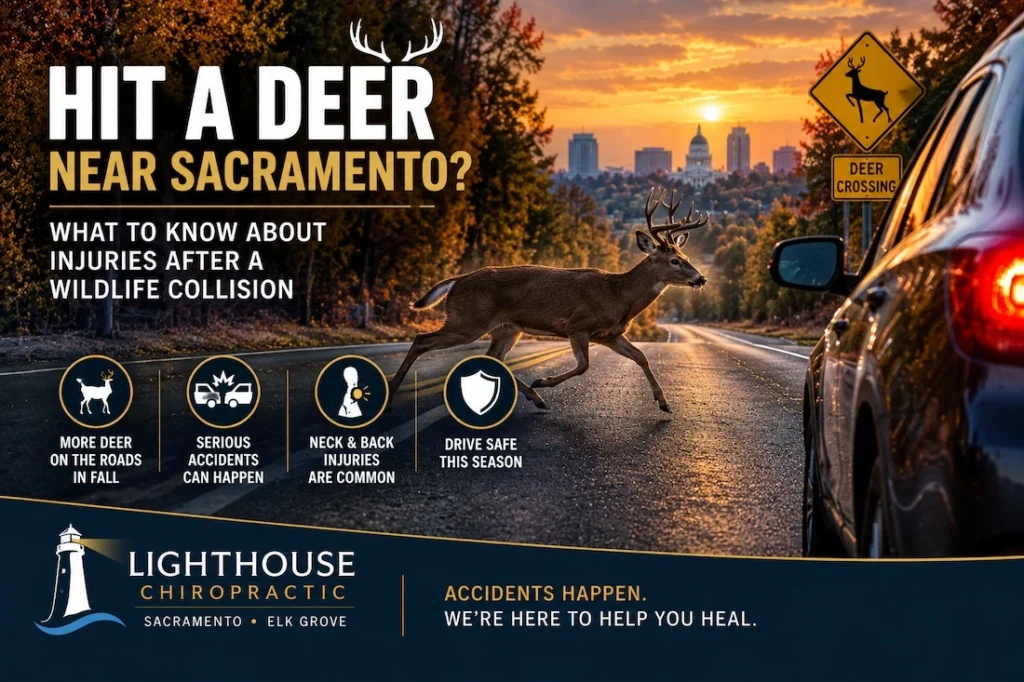
Hit a Deer Near Sacramento? What to Know About Injuries After a Wildlife Collision
A deer suddenly appearing in front of your car leaves very little time to think. You may slam on the brakes, swerve to avoid the animal, leave the roadway or collide with the deer before you have time to react. Even if you avoid a direct impact, the emergency maneuver itself can result in a crash and injuries.
That scenario becomes particularly relevant during fall in Northern California. The California Department of Fish and Wildlife warns that wildlife-vehicle collisions increase every autumn as reduced daylight coincides with deer, elk, bears and other animals moving for migration, mating and foraging. Large animals such as deer are also more likely to cross roads during their fall mating season.
For Sacramento and Elk Grove drivers heading toward the foothills, rural areas or other parts of Northern California this November, knowing how to react to wildlife and what to do after a collision can help protect both you and your passengers.
Why Do Deer-Vehicle Collisions Increase During the Fall?
Deer-vehicle collisions increase during fall partly because deer are more active and mobile during mating and migration periods, while shorter days put more drivers on the road after dark.
Research from the UC Davis Road Ecology Center notes that mule deer are more likely to be on roadways during the fall breeding season and subsequent migration. Its research indicates that as much as one-third of California’s deer-vehicle conflicts can occur during the two fall months from mid-September into November.
The end of daylight saving time adds another factor. California’s Department of Fish and Wildlife specifically warns drivers about the increase in wildlife collisions every autumn as evening commutes shift into darkness at the same time wildlife is particularly active.
That makes November an especially important month to watch not only the road ahead, but also the shoulders and surrounding areas where animals may appear.
Are Deer Collisions a Significant Problem in California?
Yes. Wildlife-vehicle collisions are common enough in California to cause hundreds of millions of dollars in economic losses and numerous human injuries.
The California Department of Fish and Wildlife reported that nearly 400 people were injured in more than 2,000 reported wildlife-related collisions in California during 2019. More recent research from the UC Davis Road Ecology Center estimates that approximately 34,000 to 53,000 mule deer may be killed by vehicles in California each year.
Those numbers also don’t tell the entire story from an injury perspective. A driver doesn’t have to actually hit a deer to become involved in an accident. Swerving or braking suddenly to avoid an animal can result in a collision with another vehicle, a roadside object or even a rollover.
From the driver’s perspective, an avoided deer collision can still become a serious car accident.
Where Should Sacramento-Area Drivers Be Most Alert for Deer?
Drivers should be particularly cautious when traveling from the Sacramento metropolitan area into rural, wooded and foothill environments where wildlife is more likely to cross roadways.
That can include trips east toward the Sierra foothills and other routes where suburban development transitions into open space or wildlife habitat. Drivers should also pay additional attention near streams, rivers and other areas wildlife frequently uses.
CDFW recommends watching road shoulders for movement or reflecting eyes and being particularly alert during morning and evening hours, when wildlife is often more active.
The important point isn’t to memorize a list of specific roads. Wildlife can appear unexpectedly, and a road you’ve driven dozens of times without seeing a deer can look very different during fall movement periods.
What Should You Do If a Deer Appears in Front of Your Car?
If you see a deer near the roadway, reduce your speed, remain alert and remember that another animal may be following it.
CDFW specifically advises drivers to slow down when an animal is on or near the road, pay close attention to shoulders and be aware that wildlife often travels in groups.
Your reaction should also account for surrounding traffic. An instinctive attempt to avoid the animal can potentially put your vehicle into another traffic lane or send it off the roadway, creating an entirely different collision.
Modern driver-assistance systems such as forward collision warning and automatic emergency braking may help in some emergency situations, but NHTSA emphasizes that these systems are assistive technologies. The driver remains responsible for steering, braking and controlling the vehicle.
Slowing down before an encounter occurs gives you something particularly valuable when an animal appears unexpectedly: more time to respond.
Can You Be Injured Without Actually Hitting the Deer?
Yes. A driver or passenger can potentially be injured during an emergency maneuver even when the vehicle never makes contact with the animal.
Imagine traveling along a rural road when a deer enters your lane. You immediately brake hard and steer away. Your vehicle may be struck from behind by another driver, cross into another lane, hit a roadside object or leave the pavement.
The sudden braking and steering can also cause occupants’ bodies to move rapidly against their seat belts and seats. Whether that movement results in an injury depends on the circumstances, but neck, back, shoulder and other musculoskeletal symptoms can occur following abrupt vehicle movements and collisions.
This is why the question after a wildlife incident shouldn’t only be, “Did I hit the deer?” It should also be, “What happened to the vehicle and the people inside it?”
What Injuries Can Happen in a Deer-Vehicle Collision?
Wildlife collisions can result in injuries ranging from muscle and joint pain to serious trauma, depending on the speed, type of impact and what happens to the vehicle.
A sudden collision or secondary impact may place stress on the neck and back, potentially resulting in whiplash-type symptoms, muscle strains, joint injuries, headaches, shoulder discomfort or reduced range of motion.
Higher-speed crashes can cause much more serious injuries, including fractures, head injuries and neurological trauma. A vehicle that leaves the road or rolls over creates additional injury risks that require appropriate emergency medical evaluation.
If someone experiences severe pain, loss of consciousness, confusion, significant weakness or numbness, breathing difficulty, uncontrolled bleeding or another potentially serious symptom following a wildlife collision, emergency medical care should come first.
Chiropractic treatment may be appropriate for certain musculoskeletal injuries after a crash, but it isn’t a substitute for emergency or specialty care when serious injuries are suspected.
Can Neck or Back Pain Appear Later After the Accident?
Yes. Neck pain, back pain, headaches, stiffness and other symptoms may become more noticeable during the hours or days following a collision.
Immediately after a deer suddenly crosses your path, your attention is likely to be focused on what just happened. You may be checking your passengers, inspecting the vehicle, calling law enforcement, arranging a tow or dealing with an injured animal.
As that immediate stress passes, you may begin noticing discomfort that wasn’t obvious at the scene. Turning your head while driving might hurt, your back may become stiff after sitting, or you may develop headaches or difficulty sleeping comfortably.
New symptoms following an accident shouldn’t automatically be dismissed simply because you initially thought you were okay.
Should You See a Chiropractor After Hitting a Deer?
Chiropractic evaluation may be appropriate if you develop accident-related neck, back, joint or other musculoskeletal symptoms after a deer collision or related crash.
Whether chiropractic treatment is right for you depends on the type and severity of your injuries. An evaluation should consider how the collision happened, where you’re experiencing symptoms, whether your movement has changed and how those symptoms are affecting normal activities.
Lighthouse Chiropractic evaluates accident-related musculoskeletal injuries at its Sacramento and Elk Grove locations. If an injury requires imaging, specialty evaluation or care beyond chiropractic treatment, appropriate coordination with other healthcare providers may also be necessary.
The goal isn’t to assume every wildlife collision requires chiropractic treatment. It’s to determine why you’re experiencing symptoms and what type of care makes sense for your particular injury.
What Should You Do After Hitting a Deer Near Sacramento?
After a deer collision, move to a safe location if you’re able to do so and address injuries first. Contact emergency services when necessary, particularly when people are injured, the vehicle is creating a roadway hazard or the crash is serious.
Avoid approaching an injured deer or other large animal. A frightened or injured wild animal can behave unpredictably and may pose an additional safety risk.
Once immediate safety concerns are addressed, document the scene and vehicle damage when it is safe to do so. If another vehicle was involved, exchange the appropriate information and follow the same steps you would after another traffic collision.
Continue monitoring how you feel afterward. If neck pain, back pain, headaches, stiffness or changes in normal movement develop, consider having those symptoms evaluated rather than assuming they’ll automatically disappear.
How Can You Reduce Your Risk of Hitting a Deer This Fall?
Reducing speed and increasing awareness are two of the most important things drivers can do, particularly around dawn, dusk and after dark.
CDFW recommends being especially alert near areas wildlife frequent, watching road shoulders, avoiding distracted driving and remembering that another animal may follow the first one you see.
Those precautions become even more important when visibility is poor or you’re traveling on unfamiliar roads. Driving at a speed appropriate for the conditions gives you additional time to identify an animal and respond without making a more extreme maneuver.
Fall wildlife movement is predictable. Exactly where and when a deer will enter the road isn’t.
Hurt After a Wildlife Collision? Pay Attention to What Your Body Is Telling You
A deer collision can happen in seconds, but the physical effects of the crash may last considerably longer. Even avoiding the animal can result in a collision or emergency maneuver that places sudden stress on your body.
If you’re involved in a wildlife-related accident near Sacramento or Elk Grove, address serious injuries first and continue monitoring yourself for neck pain, back pain, headaches, stiffness or changes in movement afterward.
Lighthouse Chiropractic evaluates and treats accident-related musculoskeletal injuries at its Sacramento and Elk Grove locations. If you’re experiencing symptoms following a deer collision or a crash caused while trying to avoid wildlife, schedule an accident injury evaluation to determine what may be causing your discomfort and what type of care may be appropriate.