
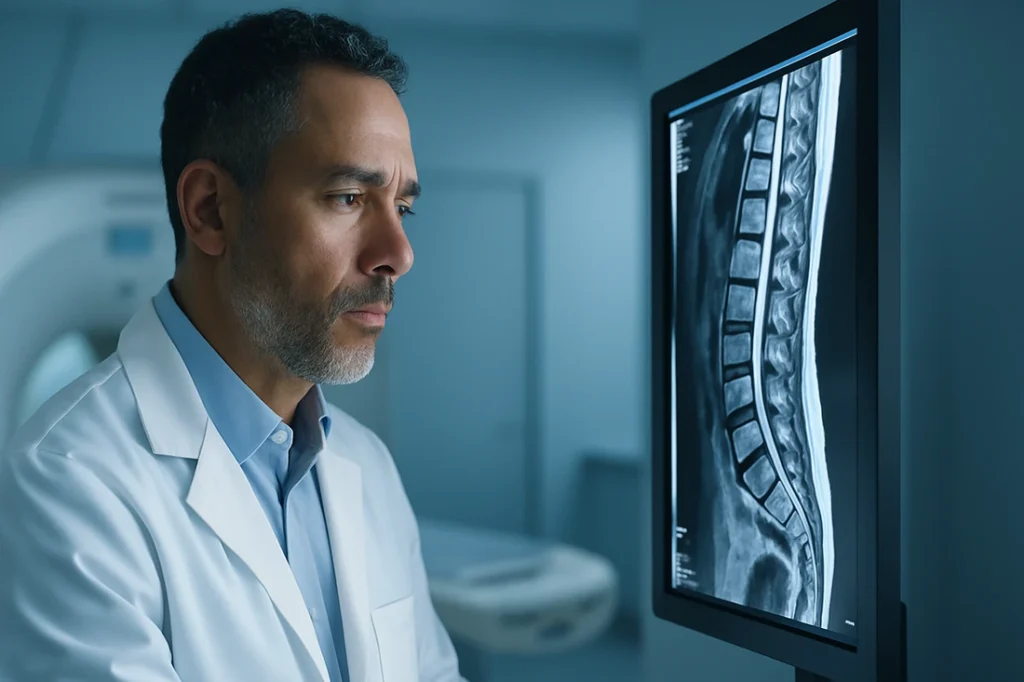
After a car accident, it is natural to wonder whether you need a scan to find out what is really going on inside your body. Many people assume that the only way to know if they are seriously hurt is to get an MRI. Others feel anxious that without advanced imaging, an injury might be missed. Both feelings are understandable, and the truth sits somewhere in the middle.
Imaging is a valuable tool, but it is one tool among several, and it works best when it is used thoughtfully. This guide explains, in plain language, how providers generally decide when imaging is helpful, the broad differences between common types of imaging, and why not everyone who is in a crash needs an MRI.
What Imaging Can and Cannot Tell Us
Imaging gives us a look inside the body, but no single scan shows everything. Different types of imaging are suited to different questions. The decision about whether to image at all, and which type to use, usually starts with a careful history and physical examination rather than with the machine. How your injury happened, where it hurts, how you move, and how your symptoms behave all guide the choice.
It is also worth knowing that scans sometimes reveal changes that are common with age and not the source of your pain. Because of this, providers interpret images alongside your symptoms rather than treating a picture in isolation. The clinical story and the imaging work together.
X-ray and MRI in General Terms
These two types of imaging answer different kinds of questions, and understanding the difference can ease a lot of worry.
- X-rays are generally good at showing bones. They are often used when a provider is concerned about a possible fracture or significant bony injury after a crash.
- MRI gives a detailed view of soft tissues such as discs, ligaments, the spinal cord, and nerves. It is typically considered when there is concern about these structures rather than bone alone.
- The two are not interchangeable. The right choice depends on what a provider suspects after examining you, not on which scan sounds more thorough.
Because each type of imaging has strengths and limits, a provider chooses based on what would actually change your care. A scan that would not affect the plan often adds cost and worry without adding benefit.
Red Flags That May Warrant Advanced Imaging
Certain symptoms raise the possibility of a more serious injury and may prompt a provider to recommend advanced imaging such as an MRI, or to refer you for urgent evaluation. These warning signs deserve prompt attention.
- Numbness, tingling, or weakness traveling down an arm or leg.
- Pain that is severe, steadily worsening, or not easing with time and conservative care.
- Loss of bladder or bowel control, which is a medical emergency.
- Significant trauma, a fall, or a high-force collision combined with concerning symptoms.
- Signs that suggest nerve or spinal cord involvement.
If you notice any of these, especially loss of bladder or bowel control or rapidly spreading weakness, seek medical attention right away. These situations call for prompt evaluation rather than waiting to see if things improve.
Why Not Everyone Needs an MRI
Many injuries after a crash involve strained muscles, sprained ligaments, and irritated joints. These soft tissue injuries are real and can be painful, but they frequently improve with conservative care and time, and an MRI often would not change the recommended plan. Ordering advanced imaging in every case is not necessarily safer or smarter.
There are also practical reasons to be selective. As mentioned, scans can show incidental findings that are not causing your symptoms, and seeing them can create unnecessary anxiety or lead to treatments that do not help. Thoughtful providers aim to image when it will guide care meaningfully, and to spare you a scan when it will not.
Another point worth keeping in mind is timing. Soon after a crash, it is often reasonable to begin conservative care and watch how your symptoms respond over a short period. If you steadily improve, advanced imaging may never be needed. If your symptoms stall or worsen, or if red flags appear, that change itself can prompt a provider to reconsider imaging. In other words, the decision is not always made on day one, and it can evolve as your recovery unfolds.
How Imaging Findings Guide Your Care
When imaging is appropriate, the results help shape your treatment plan rather than dictate it on their own. A finding might confirm a suspected problem, rule out a serious concern, or help a provider decide whether a referral to another specialist makes sense. In every case, the goal is to connect what the image shows with how you actually feel and function.
Chiropractic care fits naturally into this picture. After examining you and reviewing any imaging that has been done, a chiropractor can build a plan focused on easing pain and restoring movement, and can coordinate with your other providers when advanced imaging or further evaluation is warranted. The aim is always to match the level of testing and care to what your body genuinely needs.
Making Sense of It All
If you are unsure whether you need a scan after your crash, the best next step is a thorough evaluation rather than a guess. A few principles can help frame your thinking.
- Imaging supports a diagnosis; it rarely replaces a careful examination.
- The right scan depends on your symptoms and how your injury happened.
- Red flag symptoms deserve prompt attention and may warrant advanced imaging.
- Not needing an MRI does not mean your pain is not real or treatable.
If you were recently in a car accident around Sacramento or Elk Grove and want clear, plain-language guidance about whether imaging makes sense for you, we are happy to help. Our team will listen, examine you carefully, and recommend the right path, including imaging only when it will truly inform your care. We invite you to schedule an evaluation so you can move forward with confidence.
Disclaimer: This article provides general educational information only and is not a substitute for professional medical advice, diagnosis, or treatment. Decisions about imaging should be made with a qualified healthcare provider based on your individual circumstances, and no outcome is guaranteed. Please seek prompt medical care for any severe or worsening symptoms.